Rebecca L., Burlingame Hills
Our panel-ready 700-series sits in custom cabinetry with almost no reveal. He documented trim clearance and floor condition, padded everything, and pulled the unit without a single scratch on the millwork.
Cabinet-safe hub
A panel-ready Sub-Zero in Burlingame should be protected before diagnosis: document panel fit, floor protection, trim clearance, water and electrical slack and whether the repair can be done in place. Cabinet-safe work prevents a cooling, gasket or water-line visit from becoming a millwork or flooring problem.
Review trust
The wider appliance repair service network is backed by 700+ customer reviews across platforms with a 4.9 average rating. Burlingame customers most often mention careful cabinet protection, clear diagnosis, temperature recovery and estimate clarity.
Burlingame Sub-Zero Repair, 840 Hinckley Road, Burlingame, CA 94010. Phone: (650) 668-4599.
Our panel-ready 700-series sits in custom cabinetry with almost no reveal. He documented trim clearance and floor condition, padded everything, and pulled the unit without a single scratch on the millwork.
Larger built-in opening meant heavy doors and tricky alignment. He checked panel fit and gasket contact before and after, so the door closed clean and sealed properly when he finished.
Beautiful custom kitchen, and they treated it that way. Water and electrical slack were checked before any movement, and the cabinet face came out spotless. Careful, professional work.
Visible table
| Cabinet risk | Prevention step | Evidence photo |
|---|---|---|
| Panel reveal changes | photograph gaps before and after | full door front |
| Floor scratches | use runners and controlled movement | floor at appliance path |
| Trim or toe-kick damage | inspect clearance before tools | lower grille and toe-kick |
| Water-line stress | check slack and shutoff | lower rear or visible line area |
| Door gasket misread | test reveal and hinge before part quote | door edge and gasket |
Photo documentation should be used for expensive panels and floors before movement.
Visible table
| Work question | Often starts in place | Pull-out more likely when |
|---|---|---|
| Not cooling | temperatures, grille, fan clues | rear access or sealed-system tests are needed |
| Gasket or door issue | reveal, hinge, gasket contact | panel hardware or hinge access requires it |
| Ice maker | cube, fill and freezer checks | valve or line is inaccessible |
| Model lookup | tag and visual family ID | tag cannot be safely reached |
| Cabinet ventilation | grille and toe-kick review | heat path behind unit must be inspected |
The decision changes by model and failure path.
Visible table
| Prep item | Do | Avoid |
|---|---|---|
| Kitchen area | clear fragile items nearby | moving panels yourself |
| Photos | have ready wide cabinet and symptom photos | cropped photos with no context |
| Water issue | protect floor and note valve location | forcing a stiff shutoff |
| Model tag | photograph if easy | forcing trim to find it |
| Temperature | record both compartments | resetting repeatedly before photos |
Preparation should make service safer without disturbing the installation.
Cabinet-safe hub
Cabinet protection is not decoration. It is the sequence that protects the homeowner and the technician before a built-in appliance moves. The first pass documents the panel reveal, trim position, floor condition, lower grille, water-line route, electrical slack and anti-tip condition. If the issue can be diagnosed from the front, unnecessary movement should be avoided. That sequencing is the backbone of cabinet-safe Sub-Zero repair in Burlingame.
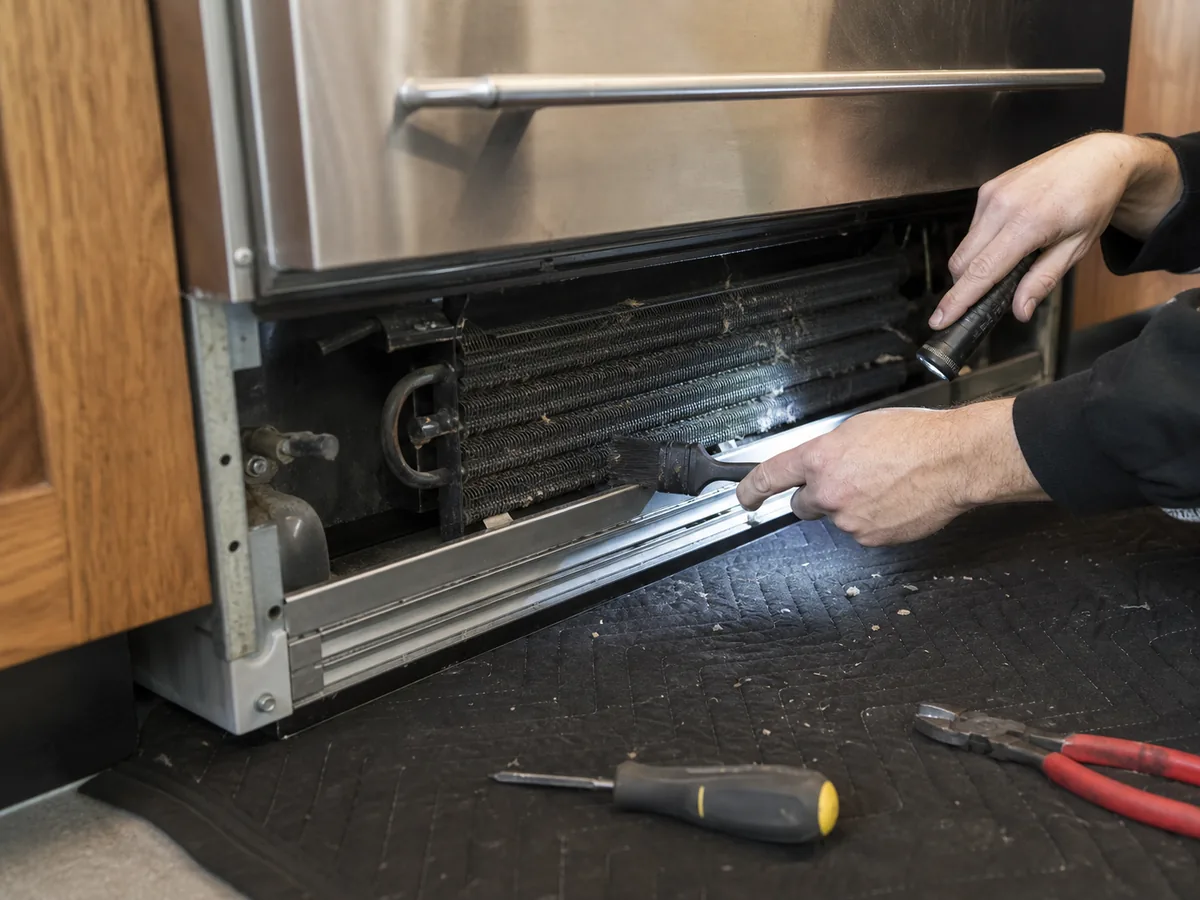
Panel-ready doors also affect diagnosis. A heavy or shifted panel can pull a door out of square, reduce gasket contact and create warm-air entry; when that happens, panel correction and door gasket and seal work are usually planned together. A lower grille or toe-kick detail can trap condenser heat. A water line with no slack can make ice maker or valve work risky.
Cabinet-safe hub
Have ready a wide cabinet photo, a lower grille photo, a model and serial number photo and one close-up symptom photo. If the issue involves the door, include the reveal and gasket edge. If the issue involves water or ice, include the floor and shutoff area if visible. These photos decide whether the visit starts as service-in-place or protected access.
Do not remove custom panels unless instructed. Do not force trim, toe-kicks or water valves. Cabinet-safe diagnosis is partly about knowing what not to disturb until the failure path is clear.
Cabinet-safe hub
Burlingame remodels often preserve older custom panels that are difficult to match. Easton Addition homes may have tight millwork and older floors. Burlingame Hills routes can add access constraints. Mills Estate kitchens may have wider built-in units where panel reveal and floor protection require more staging space.
In condo buildings, elevator timing and property-manager rules can affect pull-out work. That does not change the appliance failure, but it changes appointment planning and the written access assumption.
Cabinet-safe hub
Do not assume the refrigerator must be pulled out before the first checks. Airflow, gasket contact, alarms, model identification, ice symptoms and some control checks can often start from accessible areas. Pull-out should be tied to evidence, part access or safety, not habit.
Do not assume a cabinet mark happened during service unless pre-movement photos exist. Documentation protects everyone and gives a reassembly reference. The final check should include reveals, door closure, grille seating, floor condition and water-line dryness. Pre- and post-movement photos from real visits are collected in the built-in case portfolio.
Cabinet-safe hub
Cabinet-safe service is not complete when the part is installed. The door should close without rubbing, gasket contact should be checked, panels should return to their documented reveal, the floor should be inspected and the water line should be dry. If the unit moved, the anti-tip and trim areas should be rechecked.
For cooling work, temperatures should move in the right direction after the access steps. For gasket work, condensation risk and door contact should be verified after repeated open-close cycles. For ice maker work, the water path should be dry before the visit closes.
Next step
Call or book online with the model number, serial tag photo, current fresh-food and freezer temperatures, and a quick cabinet photo. Same-day routing is available when the Peninsula route, access and required parts allow.
For replacement parts, the policy is straightforward: factory-authorized Sub-Zero OEM parts are used when required, and the finding is documented before repair.
Burlingame Sub-Zero Repair | 840 Hinckley Road, Burlingame, CA 94010 | (650) 668-4599
Visible FAQ
It can be serviced carefully when the access plan is explicit. The technician should document panel fit, floor condition, trim clearance, water slack and whether the fault can be tested in place. Movement should be controlled and tied to the repair path.
No. Many first checks start from the door, interior, lower grille or accessible control areas. Pull-out becomes more likely for rear access, water-line work, some sealed-system testing or components that cannot be reached safely in place.
Have ready a wide front photo, door reveal photo, lower grille photo and close-up symptom photo. If water is involved, add the floor and visible shutoff area. Before movement, photos should show existing panel gaps, floor condition and trim position.
Yes. A tight toe-kick, blocked grille or remodel detail can trap condenser heat and raise temperatures. That condition can imitate sealed-system weakness. Ventilation should be checked before a compressor or sealed-system quote is accepted.
A new gasket can still leak if a heavy panel, sagging hinge or tight reveal keeps the door from closing squarely. Gasket service should include door contact, hinge behavior and reveal checks before and after the part is installed.
Do not remove trim unless instructed. Trim, toe-kicks and panels can affect alignment and may be hard to reset. Have photos ready instead. A cabinet-safe visit should decide what needs to move after the symptom and access path are understood.
Cabinet-safe labor should be visible when it changes the job: floor runners, panel documentation, controlled movement, water-line checks or reassembly verification. It should not be hidden inside a vague fee. The cost hub lists planning ranges and caveats.
The final check should include door closure, reveal alignment, grille seating, floor condition, water-line dryness and symptom-specific verification. For cooling, temperatures should move correctly. For gasket and ice work, contact or water behavior should be verified.