★★★★★
Isabel A., Mills Estate
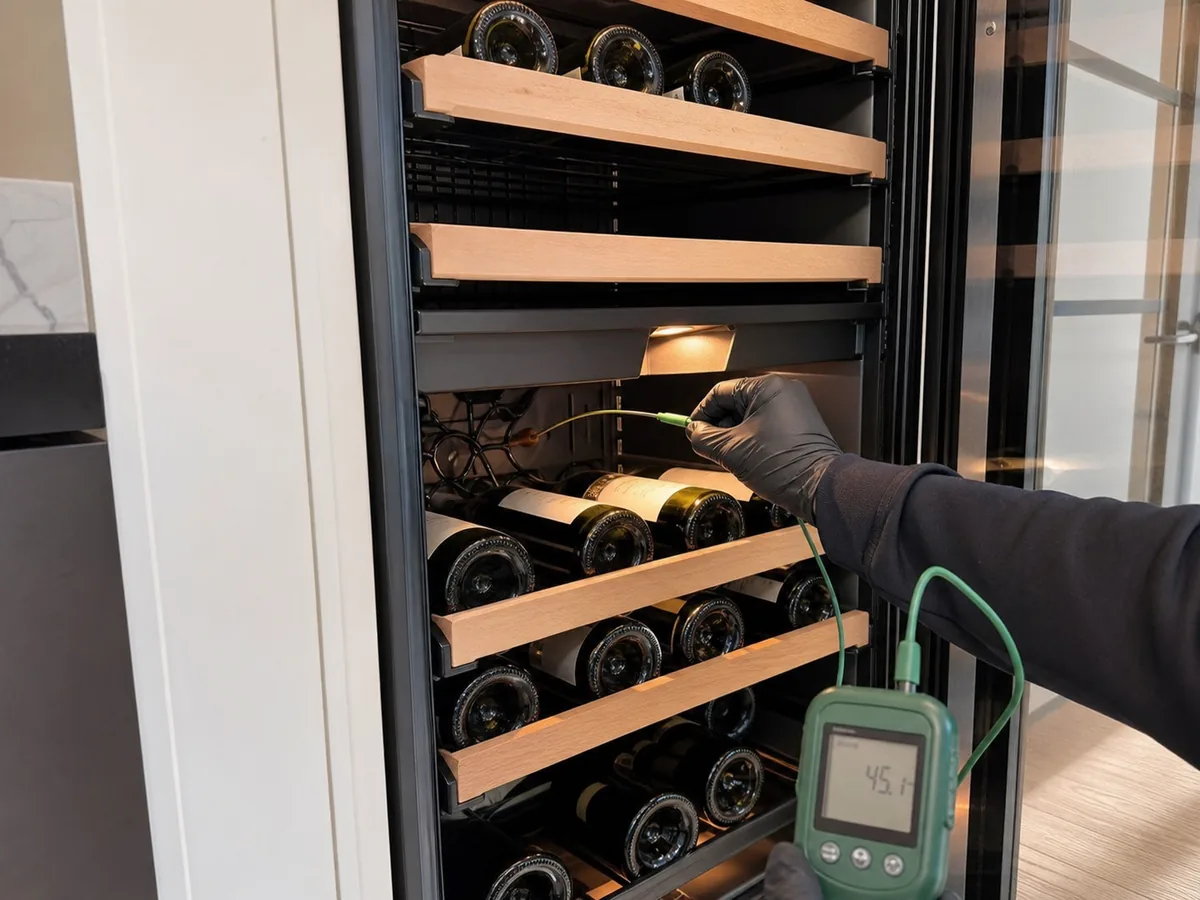
Our dual-zone wine unit was drifting warm in one zone. He used a probe instead of trusting the display, found a sensor reading off, and corrected it so both zones hold steady now.
 Burlingame Sub-Zero RepairIndependent Sub-Zero appliance repair in Burlingame
Wine storage hub
In a Burlingame Park home near 94010, Burlingame Sub-Zero Repair traces dual-zone set-point drift with a stable probe rather than the door display, comparing each zone, door contact and glass condensation. Note the set point, actual reading and affected zone, then call (650) 668-4599 to schedule a collector-safe diagnosis.
Review trust
The wider appliance repair service network is backed by 700+ customer reviews across platforms with a 4.9 average rating. Burlingame customers most often mention careful cabinet protection, clear diagnosis, temperature recovery and estimate clarity.
Burlingame Sub-Zero Repair, 840 Hinckley Road, Burlingame, CA 94010. Phone: (650) 668-4599.
Our dual-zone wine unit was drifting warm in one zone. He used a probe instead of trusting the display, found a sensor reading off, and corrected it so both zones hold steady now.
The wine column kept swinging a few degrees. He checked the door seal and condenser airflow first, cleared the real cause, and the bottles finally sit at a stable temperature.
He explained why the display number and the actual bottle temperature can differ, then proved it with a probe reading. Calm, knowledgeable and no unnecessary parts.
Visible table
| Pattern | First path | Evidence |
|---|---|---|
| Single-zone drift | zone sensor or airflow | probe and display comparison |
| Both zones warm | cabinet ventilation or sealed-system path | temperatures and airflow |
| Glass fogging | seal or room humidity | door and glass photo |
| Slow recovery | load, airflow or cooling performance | timeline after door closed |
| Repeated alarm | sensor, control or true temperature issue | alarm photo and readings |
Probe readings should be stable and placed consistently.
Wine storage hub
Wine storage is about stability, not only food-safe temperature. A small swing can be normal depending on load and sensor placement, but a steady drift, repeated alarm or zone mismatch needs a pattern. Probe readings, zone comparison, door contact and airflow checks come before board assumptions.
Glass doors and display habits matter. Frequent browsing, sunlight, warm rooms and humidity can create drift or fogging that looks like equipment failure. The diagnosis should separate room behavior from appliance behavior.
Wine storage hub
Have the model and serial number, set point, actual temperature range, affected zone, alarm photo and whether an independent thermometer was used. If bottles are valuable and the drift is ongoing, move the highest-risk bottles before waiting for service.
A photo of condensation, door seal or cabinet opening can help decide whether humidity, airflow or controls are the first path.
Wine storage hub
Do not rely only on the display for collector decisions. Do not replace a board before sensors, door contact and airflow are checked. Do not publish inventory photos or private collection details in case notes. Temperature behavior is enough.
A useful closeout should state the set point, actual readings, affected zone, test result and verification. For collector storage, proof matters more than broad reassurance.
Keep reading
Next step
Call or book online with the model number, serial tag photo, current fresh-food and freezer temperatures, and a quick cabinet photo. Same-day routing is available when the Peninsula route, access and required parts allow.
For replacement parts, the policy is straightforward: factory-authorized Sub-Zero OEM parts are used when required, and the finding is documented before repair.
Burlingame Sub-Zero Repair | 840 Hinckley Road, Burlingame, CA 94010 | (650) 668-4599
Visible FAQ
A small swing can be normal depending on sensor placement, door openings and load. A steady drift, repeated alarm or one zone consistently missing its set point deserves diagnosis with a probe and airflow check.
Fogging can come from humidity entering around a seal, room conditions, door openings or a temperature difference across the glass. It is a clue, not a diagnosis by itself. Photograph the pattern and record zone readings.
If temperatures are drifting beyond your risk tolerance, move the highest-risk bottles before waiting on service. The technician does not need inventory details. Set point, actual readings and zone behavior are enough for diagnosis.
It can, but board replacement should follow sensor, airflow, door contact and probe verification. A display mismatch or alarm does not automatically prove the board failed. Evidence should guide the part decision.
Photograph the model tag, display, any alarm, glass fogging, door seal and wide cabinet opening. Add notes on set point, actual temperature and whether one zone or both zones are affected.
It can make weak door contact or glass condensation more visible. Humidity alone is not a diagnosis, but it changes the first checks: seal condition, door openings, room conditions and cabinet ventilation.