Burlingame sits on the Bay side of the Peninsula, a few minutes from the water and directly under the path the marine layer takes as it spills over from the coast. That damp, faintly salty air is the single biggest environmental factor working on a built-in refrigerator here — more than heat, which this town rarely sees in excess.
A Sub-Zero is built to outlast almost everything in the kitchen, but it rewards a little seasonal attention. Here is the checklist we walk Burlingame owners through, organized by the part of the year it matters most.
Late spring: clear the condenser before the warm spell
The handful of genuinely warm afternoons Burlingame gets tend to arrive in late spring and early fall, often when an offshore wind briefly clears the fog. Those are the days a loaded condenser coil shows itself. Through the damp months the coil collects a fine film of moisture-bound dust that insulates it, so when the temperature finally climbs the compressor has to work twice as hard to shed heat.
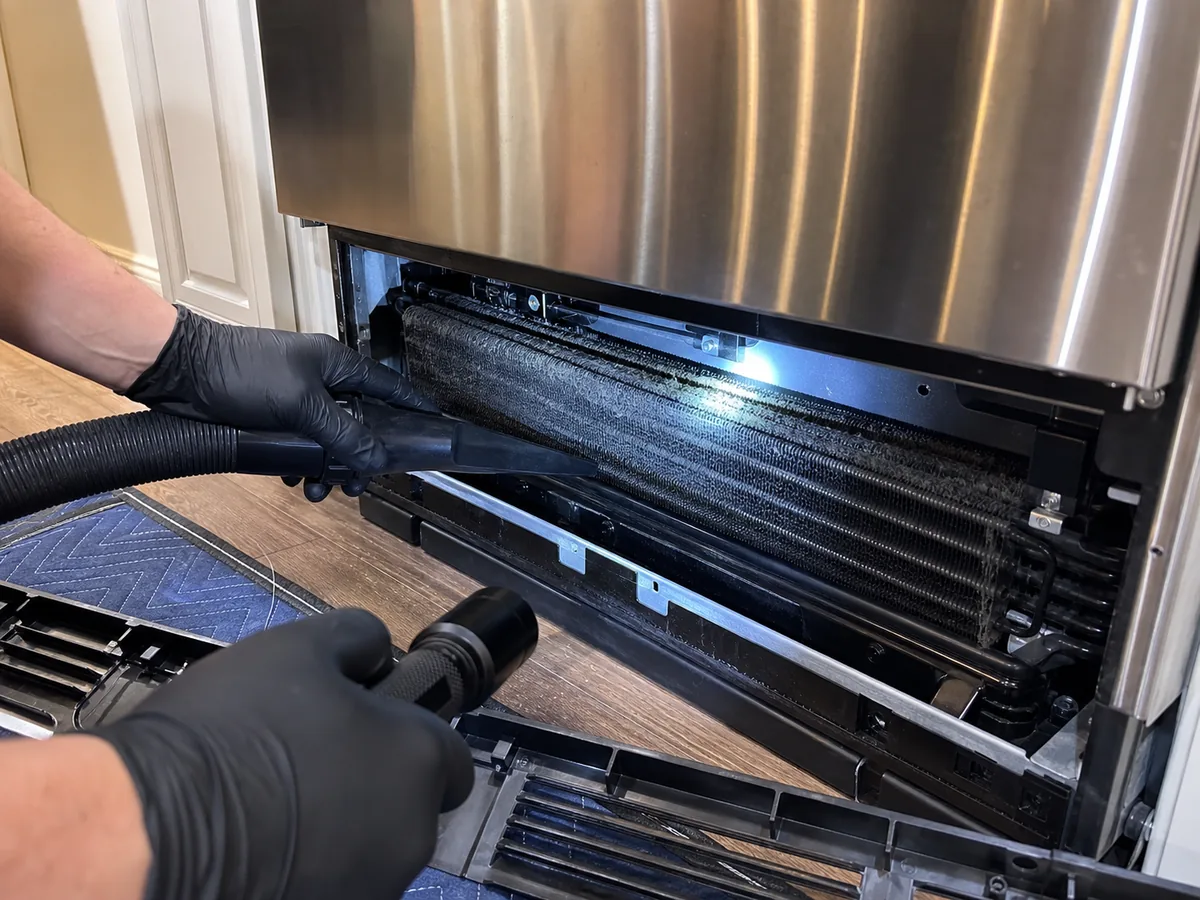
Before that first warm stretch, the grille brush-and-vacuum is the highest-value thing you can do. On a built-in it lives behind the upper grille — a five-minute job that keeps the sealed system running cool through the rest of the year.
Summer fog: watch the door gaskets
Burlingame summers are famously grey, and the steady humidity is hard on door seals. A gasket that closed perfectly in March can start to sweat and frost at the corners by July. Run a hand along the seal once a month through the foggy season; a cold, damp line on the cabinet face is the early sign of a gasket starting to give. Caught early it's a clean swap. Left alone it forces the compressor to run long hours fighting warm air it shouldn't be seeing.
Autumn: salt air and the homes near the Bay
Homes closest to the Bayfront — toward the lagoon and the eastern flats off Airport Boulevard — get a touch of salt with their fog. Over years that accelerates corrosion on exposed metal and on the condenser fins. If you're in that zone, an autumn inspection of the coil and fan is worth scheduling. Inland, up toward El Camino Real and the Easton Addition, the salt is a non-issue, but the damp still earns the same coil clean.
Winter: the hillside homes and stable temps
Up in Burlingame Hills the air is drier and the temperatures more stable, which is easy on the sealed system — but the older Mediterranean and Spanish-revival kitchens up there were rarely designed around a 48-inch built-in, so airflow around the unit is often tighter than it should be. Winter, when the kitchen runs cooler, is a good time to confirm the unit has breathing room at the grille and isn't boxed in by cabinetry that has shifted over the decades.